
Tuesday, 10 November 2015

Thursday, 10 September 2015
Friday, 4 September 2015

Thursday, 27 August 2015
Saturday, 15 August 2015

Thursday, 13 August 2015

Tuesday, 11 August 2015
Friday, 10 July 2015

Tuesday, 7 July 2015
BONSAI SOIL
The main thing to concentrate about before starting a bonsai is bonsai soil. I browsed many internet pages about Bonsai found that it is major component of Bonsai life.

There are three main components of the Bonsai soil. which are primarily used in the Japanese Bonsai soil, which are

There are three main components of the Bonsai soil. which are primarily used in the Japanese Bonsai soil, which are
- AKADAMA :
- Akadama is a naturally occurring clay-like (but not clay) mineral found only in one region in Japan. It is surface mined, dried, graded and packaged. No baking or firing is involved. When wetted, it does not form a slurry like clay but forms a gritty paste.It is available online but very high in cost. normal clay can also be used, some Bonsai experts also recommend Cat litter. but it is up to you what is easily available to you.
 2. COMPOST:
- Compost is another main ingredient in the Bonsai soil mix. Any organic compost can be used for the Bonsai.
3. Perlite:
- perlite is used for the proper Drainage and aeration of the soil. It keeps soil loose and keeps it from getting compact which later helps us in easy re-potting.
-

4. Tiny Gravel and Sand:
- Fine Gravel is also used for the proper drainage often it is also layered at the bottom of the pot for much better drainage.

- at last this is the video on making Bonsai soil
Sunday, 5 July 2015


Saturday, 4 July 2015
MOST COMMON BONSAI SPECIES
- Chinese Elm


 Chinese Elm(Ulmus parvifolia)is the one of most commonly tree used for Bonsai, it's a deciduous tree found in the countries like China, India, Japan, North Korea But can also be seen in other parts of the world. it can reach up to 30-60 ft of height it's got small leaves and fruits.
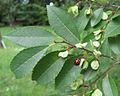
Chinese Elm(Ulmus parvifolia)is the one of most commonly tree used for Bonsai, it's a deciduous tree found in the countries like China, India, Japan, North Korea But can also be seen in other parts of the world. it can reach up to 30-60 ft of height it's got small leaves and fruits.
Owing to its versatility and ability to tolerate a wide range of temperatures, light, and humidity conditions, Chinese elm is a popular choice as a bonsai species, and is perhaps the single most widely available. It is considered a good choice for beginners because of its high tolerance of pruning.
Specific Bonsai care guidelines for the Chinese Elm bonsai
Position: The Chinese elm grows well in full sun and also in partial shade. In mild climates it can stay outside during the winter. A Chinese Elm bought as an indoor bonsai can be placed outside during the summer and in winter it is best to take it into a cold frost-free room. Chinese Elms can usually endure some frost but it seems that it differs depending on the region it was imported from. Trees from northern Chinese regions seem to be more frost-hardy that those from southern areas. Depending on the temperatures of their winter quarters Chinese Elms can either drop their leaves or keep them until spring when the new shoots emerge.
Watering: The Chinese Elm must be watered generously as soon as the soil gets dry. Drought should be avoided as well as permanent wetness.
Feeding: During the growing season the Chinese Elm should be fed well. It doesn't require very special fertilizer. A combination of solid organic fertilizer and a well-balanced liquid chemical product is a good concept. When the elm is in a cold place in winter it should not be fed during dormancy.
Pruning: If you let the Chinese Elm grow freely it will thicken rapidly. It responds well to frequent trimming which produces a dense ramification and it also buds well from old wood after strong pruning. Allow shoots to extend to 3 or 4 nodes and then prune back to 1 or 2 leaves. A good time for pruning large branches of the Chinese elm is late autumn.
The elm can be shaped very well with normal wiring and guy wires.
Repotting: Younger Chinese Elms should be repotted every two years, older and large specimens can be repotted in longer intervals. Spring is the best time for repotting. Root pruning should be done with precision and as the Chinese Elm tends to produce crooked and intertwined roots you should work on them very carefully in order to create a regular nebari as good as possible.
The Chinese Elm has no special requirements concerning the soil, but it should be well-drained. A standard soil mixture can be used.
Propagation: Chinese Elm Bonsai trees can be propagated by cuttings without problems usually. Propagation by seeds is less recommendable.
Pests and diseases: Often the Chinese Elm is infested by spider mites or scale when humidity is low. Appropriate pesticides should be used and frequent spraying with water might help additionally. Spraying with thinned lime-sulfur or systemic pesticides can make the Chinese Elm drop all its leaves, so avoid these products.
Watering: The Chinese Elm must be watered generously as soon as the soil gets dry. Drought should be avoided as well as permanent wetness.
Feeding: During the growing season the Chinese Elm should be fed well. It doesn't require very special fertilizer. A combination of solid organic fertilizer and a well-balanced liquid chemical product is a good concept. When the elm is in a cold place in winter it should not be fed during dormancy.
Pruning: If you let the Chinese Elm grow freely it will thicken rapidly. It responds well to frequent trimming which produces a dense ramification and it also buds well from old wood after strong pruning. Allow shoots to extend to 3 or 4 nodes and then prune back to 1 or 2 leaves. A good time for pruning large branches of the Chinese elm is late autumn.
The elm can be shaped very well with normal wiring and guy wires.
Repotting: Younger Chinese Elms should be repotted every two years, older and large specimens can be repotted in longer intervals. Spring is the best time for repotting. Root pruning should be done with precision and as the Chinese Elm tends to produce crooked and intertwined roots you should work on them very carefully in order to create a regular nebari as good as possible.
The Chinese Elm has no special requirements concerning the soil, but it should be well-drained. A standard soil mixture can be used.
Propagation: Chinese Elm Bonsai trees can be propagated by cuttings without problems usually. Propagation by seeds is less recommendable.
Pests and diseases: Often the Chinese Elm is infested by spider mites or scale when humidity is low. Appropriate pesticides should be used and frequent spraying with water might help additionally. Spraying with thinned lime-sulfur or systemic pesticides can make the Chinese Elm drop all its leaves, so avoid these products.
Hi friends i would like to dedicate this blog to the beauty of the Bonsai. I'll start with presenting some of the most beautiful Bonsai i have encountered on the internet and eventually i'll try to publish some of important things about Bonsai and who knows i might show you some of Bonsai's of my own.till then enjoy this master piece.


Subscribe to:
Comments (Atom)